
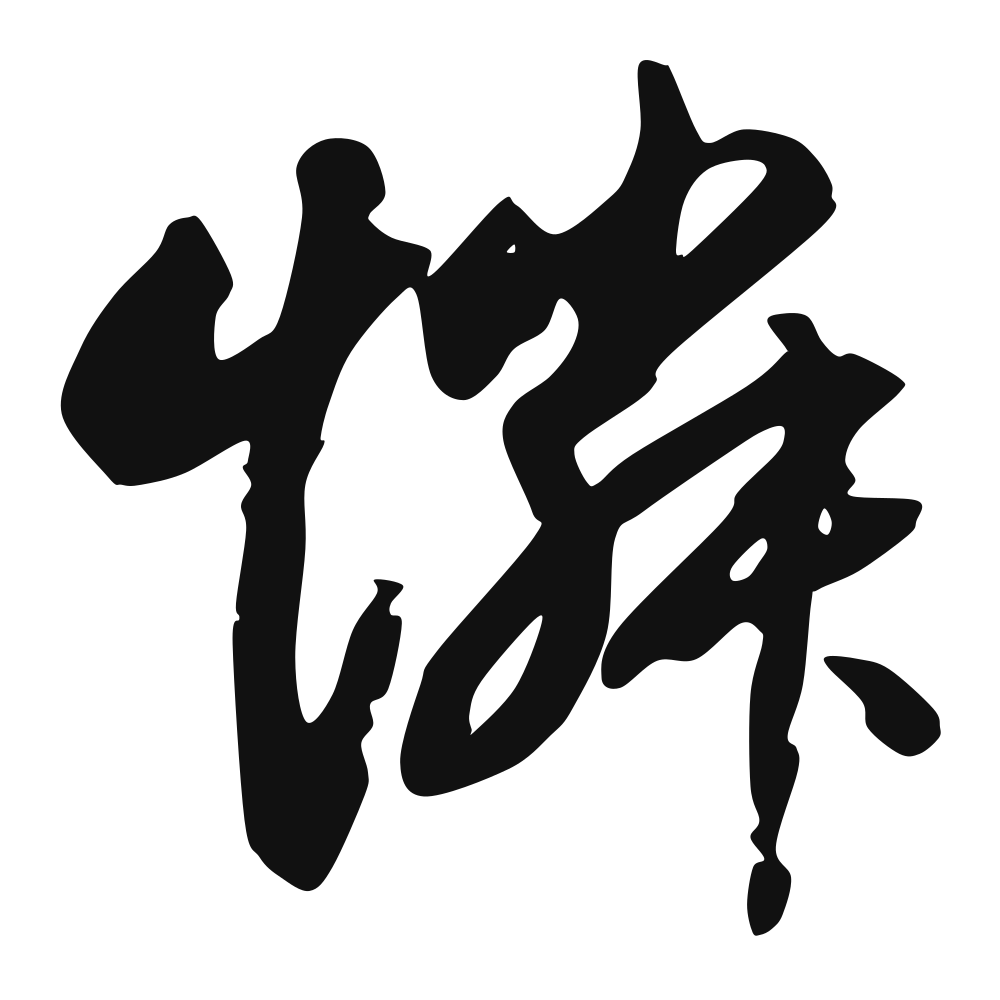
The Calligrapher — Zhào Mèngfǔ 赵孟頫
Yuan master whose elegant regular and running script revived classical tradition.
Yuan calligrapher (1254–1322), master of regular script/running script/cursive script — Yuan reviver of classical elegance who could write any script beautifully and did. Yuan dynasty
Cultural Story
怜 is to feel the small thing's hurt — 憐 the pity, and the love that is mostly protection. The word leaned toward the weak: the orphan, the abandoned wife, the cold bird. A heart that bends down, not the pity that looks from above, but the kind that kneels.
Common words & phrases
- 可怜 pitiful · poor · pity
- 怜悯 pity · compassion · sympathize
- 怜爱 love dearly · have tender affection
- 怜惜 have pity on · cherish
Read the story behind the character
可怜 is the verdict on a soaked cat, 怜爱 the softness a grandparent shows the child, 怜悯 the look a donor tries not to let show. The orphan is a story now; the bend is real. We still kneel to the small hurt, and sometimes only to keep the looking-from-above at bay, which the word always knew.
Why this character belongs on skin
There is a tenderness that arrives uninvited, the way rain finds the back of your neck on a night you thought you were closed off. 怜 lives in the heart radical, and it is the heart moved by another's small suffering — not the cold pity that looks down from above, but a hand that kneels to the same wet ground. The old tongue knew this character as love too: to cherish what is fragile because it could break. A Daoist sage said the softest water wears the hardest stone, and compassion is exactly that patient water. To carry 怜 on your skin is to confess you can still be undone by a stranger's grief, that your armor was never the real story. Let it mark the place where you chose to feel anyway. The needle, in the end, is a kind of mercy — and it stays.
Own this character
Purchase delivers the original SVG of this glyph, brushed by Zhào Mèngfǔ 赵孟頫, ready to place on skin, paper, or screen.