
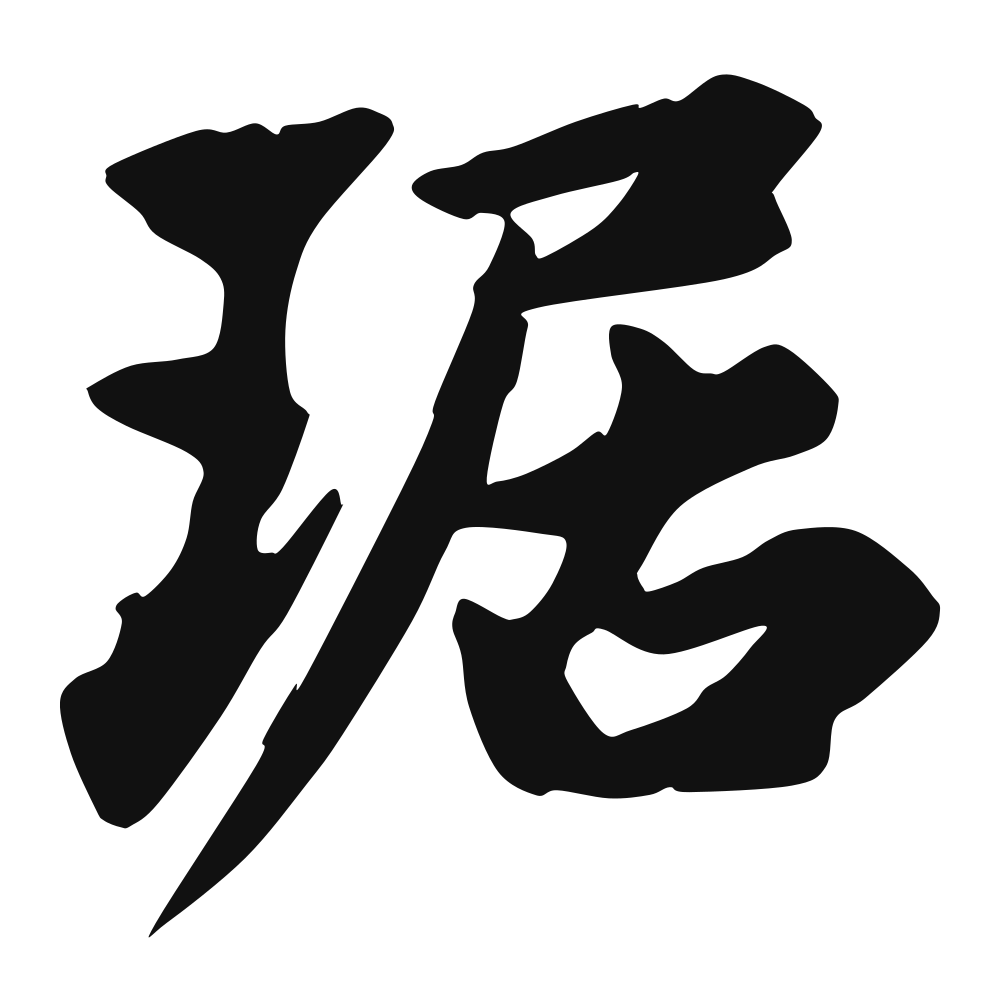
琚
ornamental gems for belt
Closest English meanings
jade pendant
The Calligrapher — Zhào Mèngfǔ 赵孟頫
Yuan master whose elegant regular and running script revived classical tradition.
Yuan calligrapher (1254–1322), master of regular script/running script/cursive script — Yuan reviver of classical elegance who could write any script beautifully and did. Yuan dynasty
Cultural Story
琚 is a jade pendant worn at the waist; the 詩經 sings '投我以木瓜, 报之以琼琚,' a gift of fine jade returned for a simple fruit. Such 琚佩 adorned gentlemen and sealed friendship, jade's cool weight a token of honor between hosts and guests.
Common words & phrases
- 琼琚 fine jade · gift of jade
- 琚佩 jade ornaments
Read the story behind the character
We meet 琚 in 琼琚 (fine jade, a gift of jade) from the 詩經, and 琚佩 (jade ornaments) in costume dramas of the Zhou court. Rare in speech today, the character survives in classical quotations and jewelry catalogs, a small pendant that once carried friendship and rank.
Why this character belongs on skin
In the Book of Songs, a lover moves to meet his beloved 'wearing jade pendants that ring'—琚, the ornament at the waist that announced him before he arrived. Jade was worn not to boast but to behave: the chime of the stones marked every step, so a gentleman moved slowly, gracefully, and could not hurry through a room without the music telling on him. Conduct made audible. There is something acheingly intimate about that—an accessory whose whole purpose was rhythm, presence, the sound of a person taking their time toward you. 琚 is the pendant in that poem, the one that chimed in the ancient courtyard at dusk. Wear it for the one who waits, or the one you walk toward: beauty that announces itself softly, a small music under the clothes, kept where only closeness can hear it.
Own this character
Purchase delivers the original SVG of this glyph, brushed by Zhào Mèngfǔ 赵孟頫, ready to place on skin, paper, or screen.