
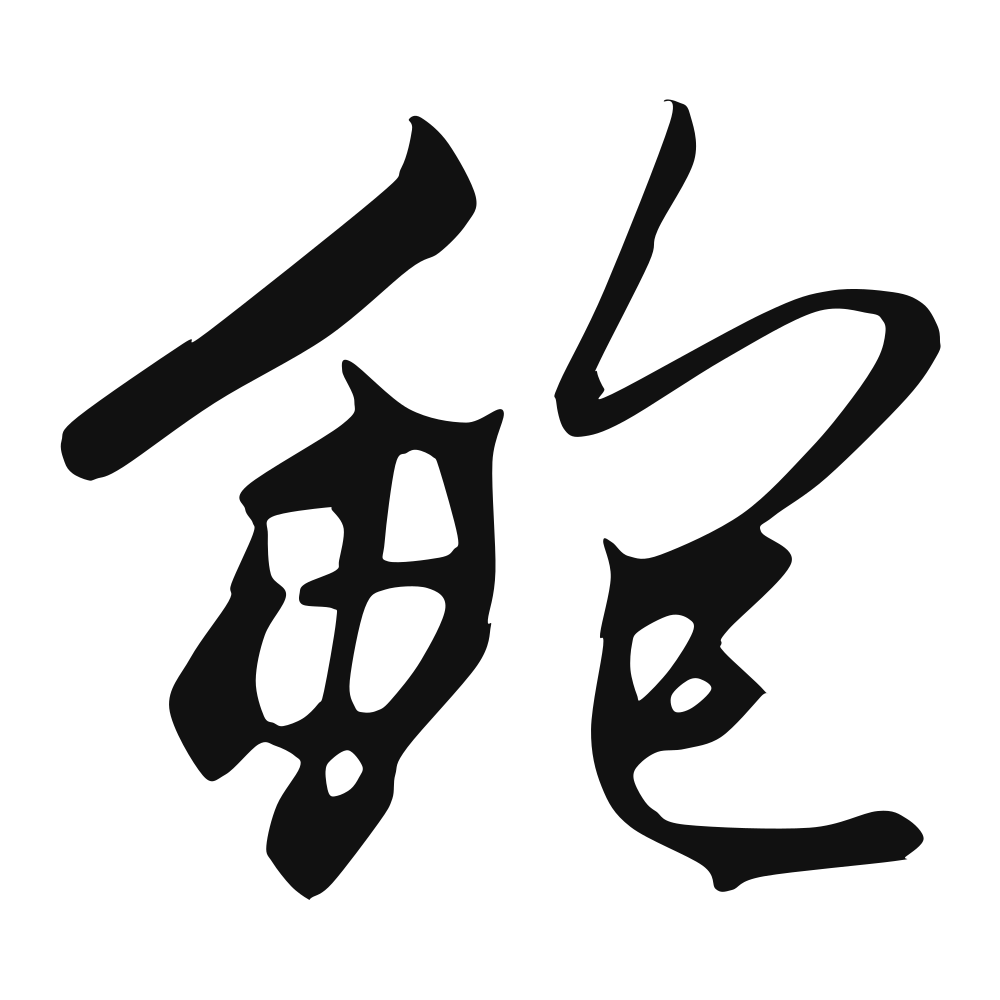
鲍
surname Bao; abalone
Closest English meanings
abalone·awl (surname)
The Calligrapher — Zhào Mèngfǔ 赵孟頫
Yuan master whose elegant regular and running script revived classical tradition.
Yuan calligrapher (1254–1322), master of regular script/running script/cursive script — Yuan reviver of classical elegance who could write any script beautifully and did. Yuan dynasty
Cultural Story
鲍 joins 鱼 with 包 and is glossed in the 《説文解字》 as 饐鱼也, "salted or preserved fish." In antiquity 鲍 meant fish cured against decay—only later did it name the luxury shellfish we know.
Common words & phrases
- 鲍鱼 abalone
- 鲍参 abalone and sea cucumber
- 鲍肆 abalone shop
- 鲍螺 abalone shell
Read the story behind the character
Today 鲍 means abalone: 鲍鱼 the prized seafood, 鲍参 abalone with sea cucumber on festive tables, 鲍肆 an abalone shop, 鲍螺 its shell. Once humble salted fish, the character now signals banquet wealth—a rags-to-riches word on the menu.
Why this character belongs on skin
鲍 is abalone—the sea-ear, the shell with the mother-of-pearl throat, a delicacy that dynasties bankrupted themselves for. Yet the character's most famous use is a proverb of rooms: 入鲍鱼之肆,久而不闻其臭—in the abalone shop, you stop smelling the stink. The old sages meant it as a warning about company: stay long enough among the corrupt and you go nose-blind to corruption. There is a subtler mercy in it too—familiarity anesthetizes everything, even the foul, even the fine. So this little shell-word is really a meditation on what we stop noticing: our habits, our friends, our own compromises. And the reverse proverb holds the same truth: in the room of orchids you come out smelling sweet. Company is air. You breathe it whether you notice or not. Ink it as a vow to keep your senses sharp, and your company salted with something better.
Own this character
Purchase delivers the original SVG of this glyph, brushed by Zhào Mèngfǔ 赵孟頫, ready to place on skin, paper, or screen.