
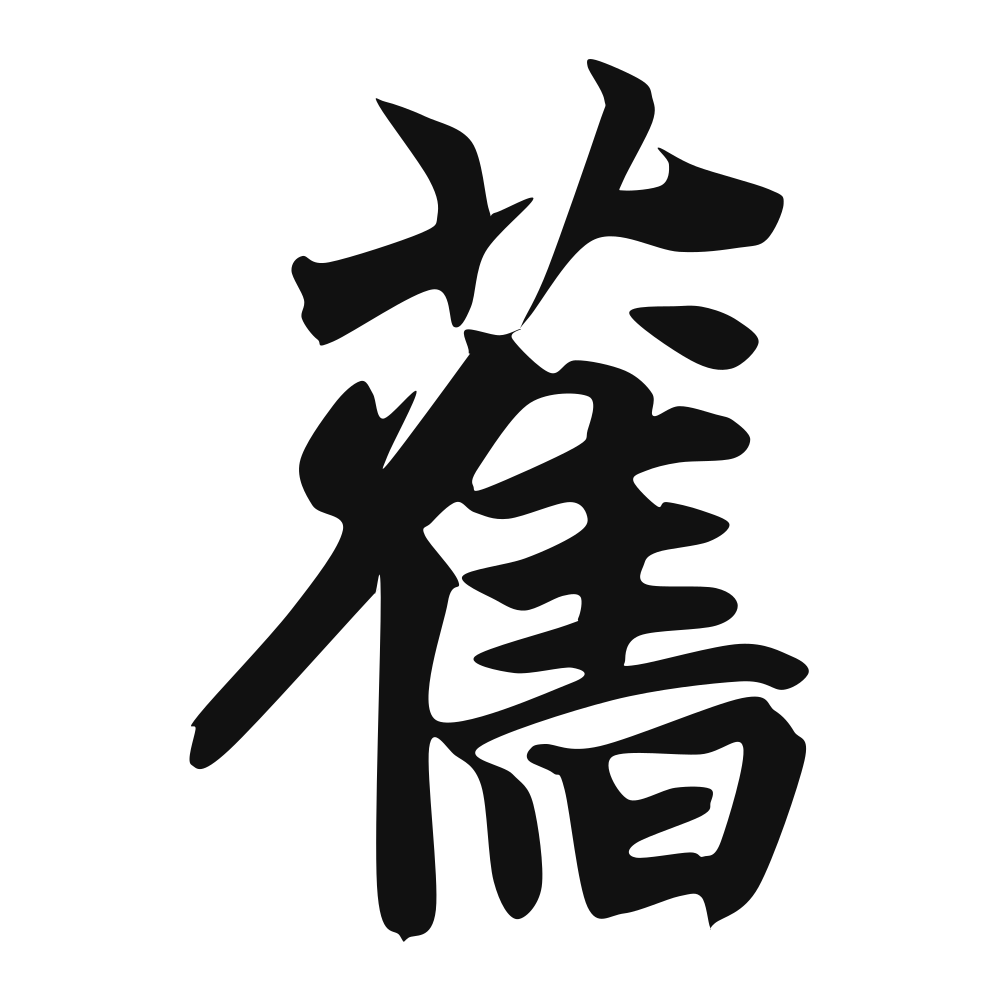
旧
opposite: new 新; former; worn (with age)
Closest English meanings
old·former·used
The Calligrapher — Zhào Mèngjiān 赵孟坚
Song kinsman of Zhao Mengfu; refined running script.
Song calligrapher (), master of running script — known for 《自书诗》. Song dynasty
Etymology & Meaning · 字义溯源
2 · The Character: 旧 Jiu (4th tone). The standard form 旧 is the shorthand of 舊. The Shuowen Jiezi gives 「舊, 鸱旧, 旧留也」 — the 鸱旧, a kind of owl that stays; the graph pairs the owl (萑) with 臼 (a mortar, phonetic). From 'the owl that remains' came the broad sense 'old, former'. The Analects, Gong Ye Chang, reports an officer who 「旧令尹之政, 必以告新令尹」 (of the former minister's policy, he always told the new one) — 旧 as 'former'. The Hexagram Za Gua contrasts 「革, 去故; 鼎, 取新」, the constant pairing of old and new. Name-lore assigns Fire (火); the Kangxi 舊 is eighteen strokes (萑部), simplified 旧 five. As a free morpheme 旧 means the old, the familiar. Honest route: 旧 is tender, not negative, but it is retrospective; pair it with 新 (old-new) so the piece reads as continuity, never as stagnation.
Cultural Story
旧 is the worn and the known. 旧时 the days before; 旧书 the rebound volume. 破旧 is the roof that leaks; 如旧 the friend unchanged. The word is the past kept in the object — the chair your grandfather 坐, the town you 认. 旧 is continuity you can touch, the used thing that still fits the hand.
Where a Western reader can stand: Where a Western reader can stand: 旧 once named an owl — 舊, a bird borrowed to mean 'old.' Zhao Mengjian's pure running script renders it as quiet refinement. Today it carries nostalgia and 故舊 'old friends,' but a lone 旧 can read as 舊貨 'secondhand, outdated.' Pair it with 新 'new' or 懷 'cherish,' and the past becomes intentional rather than discarded.
Common words & phrases
- 旧时 old times · former days
- 陈旧 old · worn-out
- 破旧 worn-out · dilapidated
- 旧书 old book · used book
- 旧友 old friend
- 如旧 as before · unchanged
Read the story behind the character
旧时 is the nostalgia post; 旧书 the stall. 陈旧 the joke; 破旧 the block. 旧友 the call you 接; 旧书 the message. The word sorts the kept from the junk — the used phone, the former flame, the unchanged face. From the market to the memory, 旧 is the past that still shows, worn but recognizable, in the thing.
Why this character belongs on skin
There is a kind of beauty that only time can mint. 旧 is the old thing, the former self, the door you used to walk through before the street changed. To love the old is not to refuse the new; it is to keep a clean account with where you came from. The character pairs the sun with the past, as if to say even what is finished was once lit. The West grows sentimental over ruins and letters; the East keeps the worn bowl because the crack holds the story. To wear 旧 is to tattoo your loyalty to the person you were before you knew better. Carry it near a scar or a birthmark, the body's own old places, and let it mean you remember. The new is easy. The old, carried on the skin, is a small act of reverence for everything the years took and the little they left.
Own this character
Purchase delivers the original SVG of this glyph, brushed by Zhào Mèngjiān 赵孟坚, ready to place on skin, paper, or screen.