
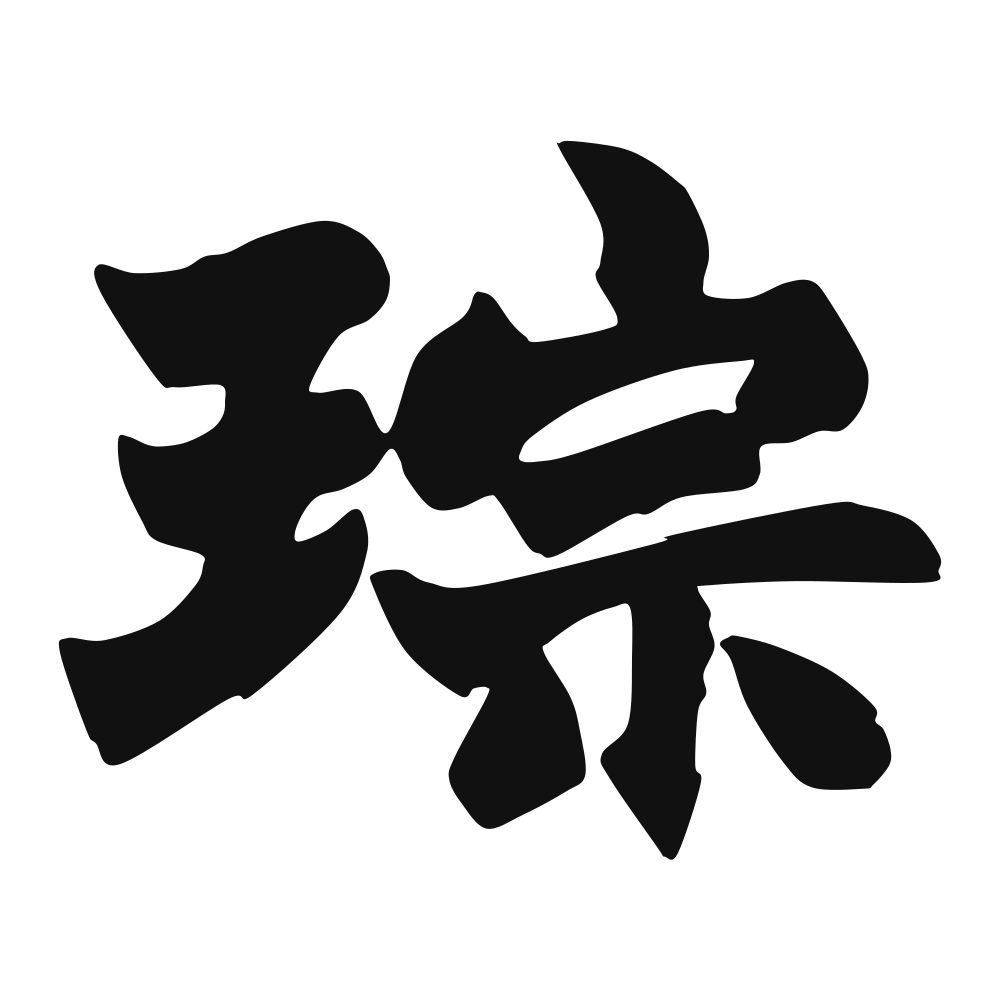
琮
surname Cong; jade tube with round hole and rectangular sides, used ceremonially in ancient times
Closest English meanings
rectangular jade tube
The Calligrapher — Zhào Zhīqiān 赵之谦
Qing pioneer who fused seal-script vigor into every style.
Qing calligrapher (), master of 篆隶/running script — Qing eclectic who fused seal, clerical and painting sensibilities into one bold hand. Qing dynasty
Cultural Story
The cong is one of Chinese civilization's oldest mysteries: a square-sided jade tube with a round bore, buried by Liangzhu culture hands over four thousand years ago. Its outer square and inner circle seem to embody 'round heaven, square earth', and the Shuowen lists it among the auspicious ritual jades.
Common words & phrases
- 玉琮 jade cong (ritual tube)
- 琮琤 jade tinkling sound
Read the story behind the character
Most Chinese meet the cong in museum glass cases, where the 玉琮, jade cong, stands as a star exhibit of prehistoric art. Poets also borrow 琮琤, a jade-like tinkling, for the sound of rain or a spring over pebbles.
Why this character belongs on skin
Five thousand years ago, someone carved a jade tube with a square outer shell and a round hollow core, polished it like the sky seen through a window, and buried it facing the earth. The 琮 was the instrument of speaking to heaven—earth's squareness carrying heaven's roundness, the vessel by which a king aligned his people with the order of things. We have lost the ritual, but not the need. Everyone builds one: the church nave, the morning meditation cushion, the long walk that empties the mind. A 琮 on the skin is a private temple—architecture small enough to carry anywhere, a reminder that you contain both the grounded square of the daily and the round openness of the eternal, and that the two were always meant to be joined. Hollow on purpose. That hollowness is where the light comes through.
Own this character
Purchase delivers the original SVG of this glyph, brushed by Zhào Zhīqiān 赵之谦, ready to place on skin, paper, or screen.