
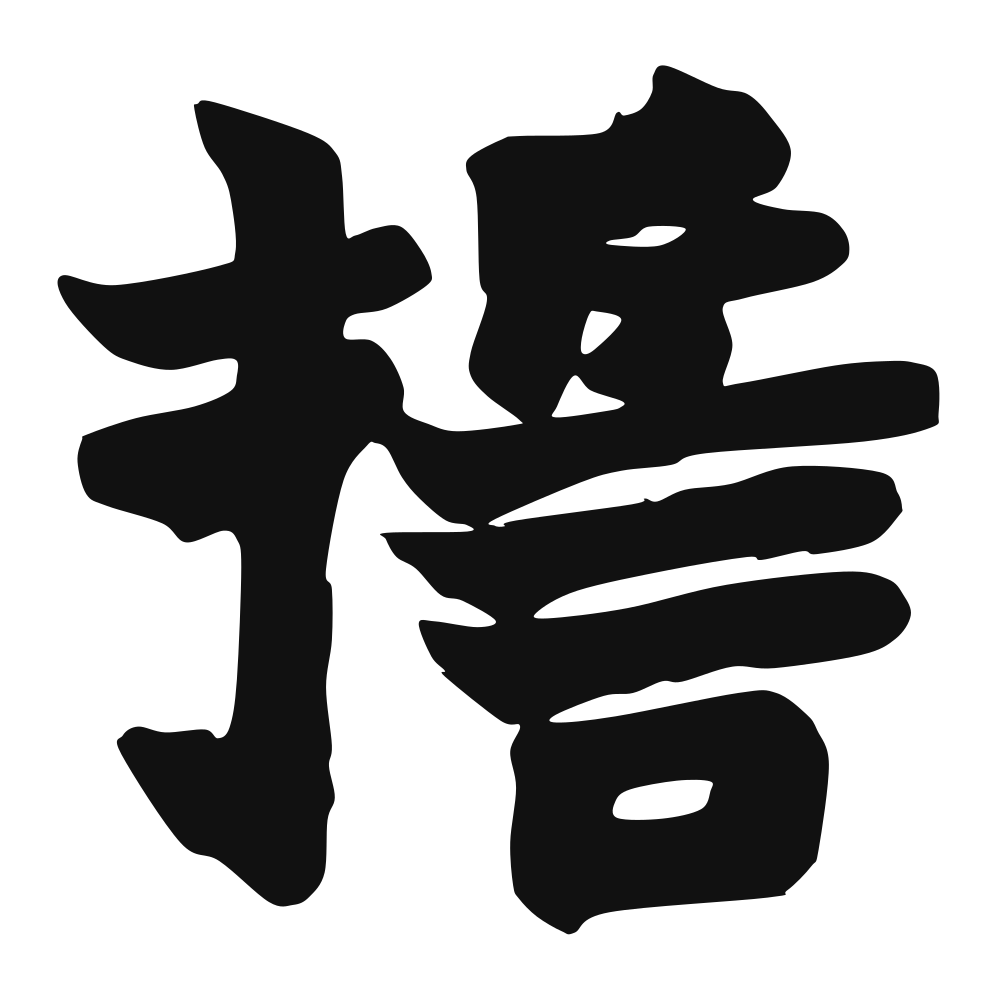
誓
oath; vow; to swear; to pledge
Closest English meanings
oath·vow·swear
The Calligrapher — Zhào Zhīqiān 赵之谦
Qing pioneer who fused seal-script vigor into every style.
Qing calligrapher (), master of 篆隶/running script — Qing eclectic who fused seal, clerical and painting sensibilities into one bold hand. Qing dynasty
Etymology & Meaning · 字义溯源
### Soundshì — shì (4th tone). Free-standing morpheme ### Original meaningShì (4th tone). The Shuowen Jiezi defines it as 「誓,約束也。从言折聲」 — a binding by words. Duan Yucai sharpens it: 「凡自表不食言之辭皆曰誓」 — any declaration that one will not swallow one's own words is a 誓. 《六書統》 reads the 折 as meaning as well as sound: 「从言从折,以言折其罪也」 — speech that cuts; the old practice of breaking an arrow or cutting a robe to seal a promise sits behind the graph. The ritual definition is the cleanest: 《禮記·曲禮》「約信曰誓」 — a sworn agreement is called 誓. 《詩·衛風·氓》 gives the famous line 「信誓旦旦,不思其反」 — the vows were bright and earnest, and he did not think of turning back; 《左傳·隱公元年》 has the grim one, 「不及黃泉,無相見也」 — not until we reach the yellow springs shall we meet. In the Documents, 誓 is one of the six forms of royal speech (《尚書》 甘誓、湯誓、牧誓), addressed to troops before battle. Kangxi: 14 strokes (言部+7); naming tables assign Metal (金). This is one of the few characters in its group that is genuinely fit to stand alone. ### The structure (形聲 (or 會意兼形聲) · 从言折聲 — speech (言) + 折 'to break'; one school reads 折 as sense too: the word that cuts and seals)①言yánspeechthe radical: words spoken②折zhéto break / to snapphonetic, and for some schools the sense: the arrow broken to seal a vow③誓shìoathwords made unbreakable④信xìntrust, good faith《禮記·曲禮》「約信曰誓」 — trust is what turns a promise into an oath ### In use todayItemReading / meaningNoteReadingshì (4th tone)single syllableCore senseoath; to swear宣誓 swear an oath · 誓言 a vowGrammarfree morpheme — noun and verb誓约 · 誓师 · 誓死Tattoo fityes-standalone — clear, solemn, uncontroversialheavier than 'promise'; that is its value ### Closest words in English — and what each misses - Promise — 諾/約 hold 'promise'; 誓 is the sworn, binding form, spoken before witnesses - Vow (religious) — 願 holds 'vow / wish'; 誓 is contractual and martial as much as devotional - Loyalty — 忠 holds 'loyalty'; 誓 is the act of swearing, not the state of being faithful - Curse — 咒 holds 'curse'; a 誓 may call down a penalty but is itself a pledge, not a spellAn honest note on grammar. Free morpheme — 誓 stands alone as a noun and a verb (宣誓 to swear an oath, 誓約 a pledge, 誓師 to address troops before battle)Where a Western reader can stand: 誓 (shì) means 'oath' — the word you bind yourself with. The Shuowen calls it 約束 'a binding', and 《禮記》 defines it as 約信, an agreement weighted with trust. It is the word of battle addresses in the 《尚書》 and of the vows in 《詩經》 that were bright and earnest and then broken. As a tattoo it stands alone cleanly and reads as resolve rather than romance: heavier than '
Cultural Story
The Peasant poem in the Book of Songs recalls a lover who swore, 'With solemn oaths, morning and night, he never meant to turn against me.' The phrase xin shi dan dan paints a vow so bright it blinds the believer to its breaking. The character shi joins words to a raised hand, the utterance that binds a person beyond mere speech. From the bride's oath to the soldier's, shi is the promise meant to outlast convenience.
Where a Western reader can stand: 誓 (shì) means 'oath' — the word you bind yourself with. The Shuowen calls it 'a binding', and the Book of Rites defines it as an agreement weighted with trust. It is written as speech (言) over 折, 'to break', which one school of commentators reads as the arrow snapped to seal a promise. It is the word of battle addresses in the Book of Documents, and of the famous vows in the Book of Odes that were earnest, bright — and later broken. So as a tattoo it reads as resolve, heavier than 'promise', and honest about the cost.
Common words & phrases
- 宣誓 swear an oath
- 誓言 oath · vow
- 發誓 swear · vow
- 誓約 vow · pledge
- 誓死 swear to death
Read the story behind the character
A citizen xuan shi, takes an oath, at a citizenship ceremony; a couple exchange shi yan, vows, at the altar; a witness fa shi, swears, to tell the truth. Recruits shi si, swear to die rather than retreat, and partners seal a shi yue, a pledge, over a contract. The character still marks the moment words harden into bond, less a statement than a knot tied in front of others, meant to hold when ordinary promises would loosen.
Why this character belongs on skin
Every vow begins as a trembling. 誓 shows a hand raised over words—a gesture older than any alphabet, the moment a human being stakes something irreplaceable on what has not happened yet. The character's spine is 折, to break: break the promise and you have broken yourself. Lovers under winter moons took this shape in their mouths; soldiers bled it onto banners; the bride and the monk say versions of the same sentence. What makes it erotic is not the certainty but the risk—an oath is desire that has agreed to be accountable. Buddhism speaks of vows so vast they outlast the body; Christianity binds heaven itself with the word sworn. There is no more intimate place to keep such a thing than the skin, where every glance is a renewal. Let it sit where only the worthy will ever read it: a promise that chose a body to live in.
Own this character
Purchase delivers the original SVG of this glyph, brushed by Zhào Zhīqiān 赵之谦, ready to place on skin, paper, or screen.