
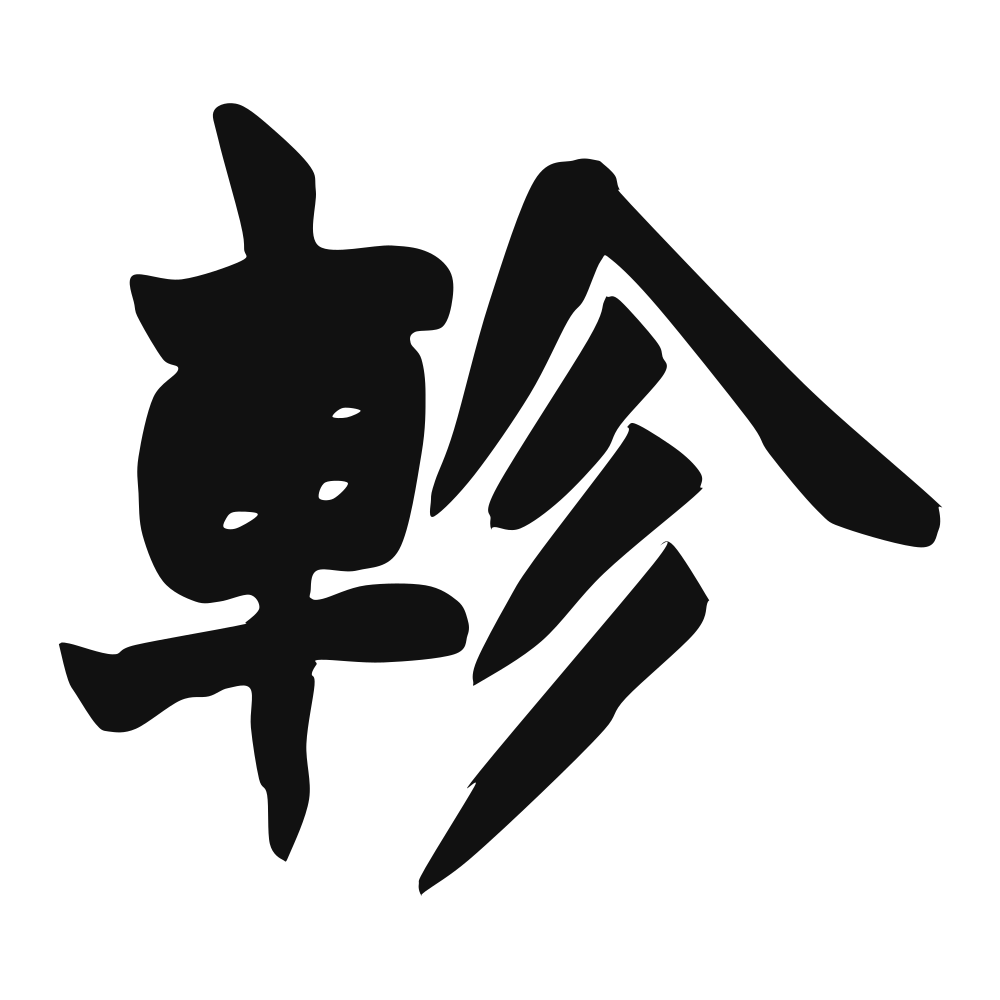
轸
square; strongly (as of emotion)
Closest English meanings
carriage·sorrow·(star)
The Calligrapher — Zhào Zhīqiān 赵之谦
Qing pioneer who fused seal-script vigor into every style.
Qing calligrapher (), master of 篆隶/running script — Qing eclectic who fused seal, clerical and painting sensibilities into one bold hand. Qing dynasty
Cultural Story
Both a cart's crossboard and a star, the character 轸 is one of the twenty-eight lunar lodges, the 轸宿, a constellation linked with wind and with sorrow. From that celestial sense come 轸念, to mourn at a distance, and 轸怀, to grieve. The humble cart part, lifted to the stars, became a word for a particular, distant sadness that the sky seems to hold.
Common words & phrases
- 轸念 sorrowfully miss
- 轸怀 lament · grieve
- 轸恤 pity · sympathize
- 轸宿 the Zhen constellation
Read the story behind the character
A diplomat's letter 轸念 the homeland he cannot visit, and an obituary 轸怀 a singer lost too soon, the old star-word still carrying grief. Astronomers note 轸宿 among the lodges used to mark the calendar two thousand years ago. The character that named a cart's rear board now names a constellation and a quiet sadness — the wheel's end become the sky's edge, far away and heavy.
Why this character belongs on skin
轸 is the crossbar at the back of a chariot—the bar your back presses against when the horses surge—and from that physical anchor came its soul: deep, turning sorrow. Chu poetry uses it for grief that moves like something wound and wound inside the chest. The Chinese never separated the machine from the feeling; a chariot at full strain and a heart at full grief were the same geometry. There is strange comfort in that precision. Sorrow is not weakness here; it is structure, the bar that keeps you from being thrown. To wear 轸 is to claim your grief as craft—loss carried with posture, mourning that holds the body together at speed. For anyone who has been thrown by life and leaned back into the bar instead. Quiet, load-bearing ink.
Own this character
Purchase delivers the original SVG of this glyph, brushed by Zhào Zhīqiān 赵之谦, ready to place on skin, paper, or screen.