
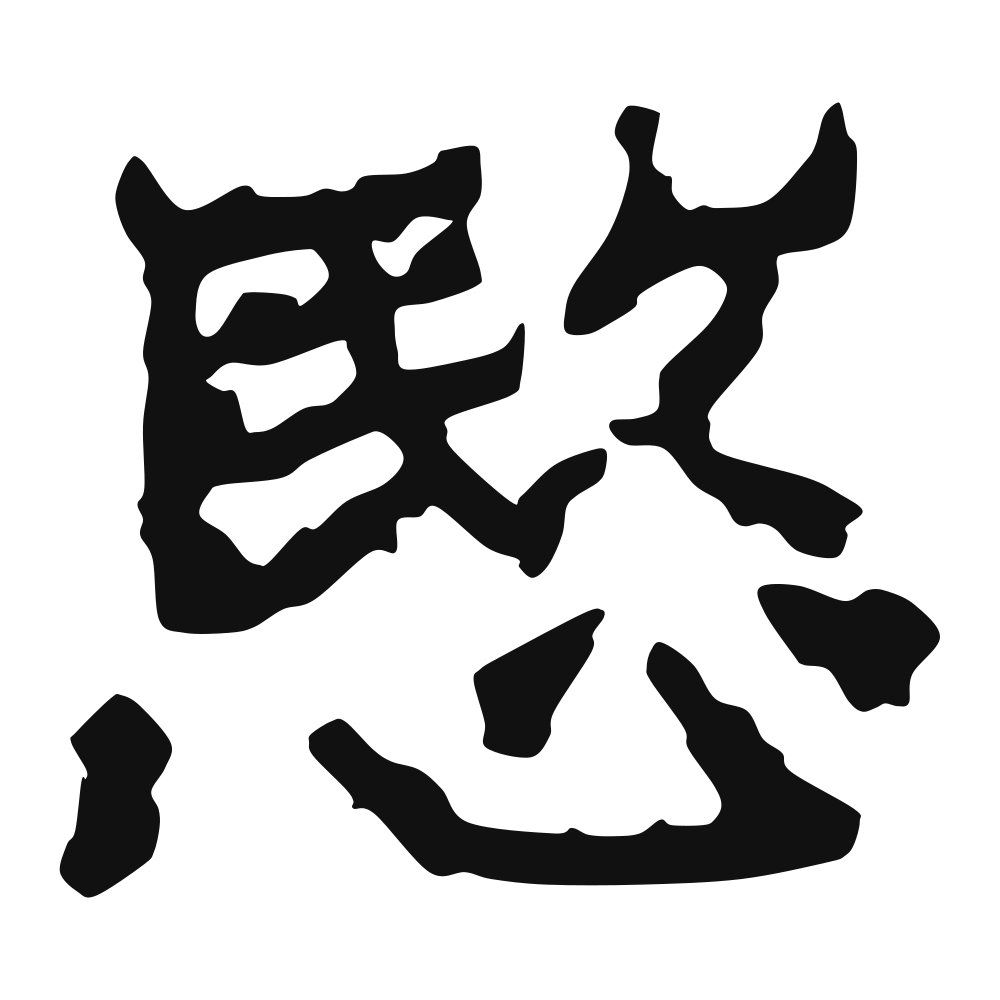
愍
愍 (mǐn) — consult a native speaker for the precise classical sense. A Chinese character. For a published pack, supply the Shuowen gloss and classical sense. This entry is auto-templated and needs fact-checking. Grammar: verify whether it stands alone or is bound
Closest English meanings
pity·sorrow
The Calligrapher — Zhèng Dàozhāo 郑道昭
Northern Wei master whose cliff steles are a regular-script treasure.
北魏 calligrapher (), master of regular script — known for 云峰山刻石. Northern Wei dynasty
Cultural Story
愍 is pity aimed at the ruined. The imperial edicts used 愍 to mourn a loyal officer who died badly, and the Buddhist sutras used it for the compassion that looks down on suffering. The heart with 敃, to stir, is sorrow that moves toward the victim. It is the loftier, more official cousin of 悯.
Common words & phrases
- 哀愍 pity · sorrow
- 愍念 pity · care for
- 愍恻 compassion
Read the story behind the character
愍 is nearly extinct in speech, preserved in 哀愍 the temple's compassion and 愍念 the formal solicitude of a foundation. It is the word a bureaucracy of mercy chooses to sound above the ordinary. Most speakers would mistake it for 悯 without a second glance.
Own this character
Purchase delivers the original SVG of this glyph, brushed by Zhèng Dàozhāo 郑道昭, ready to place on skin, paper, or screen.