
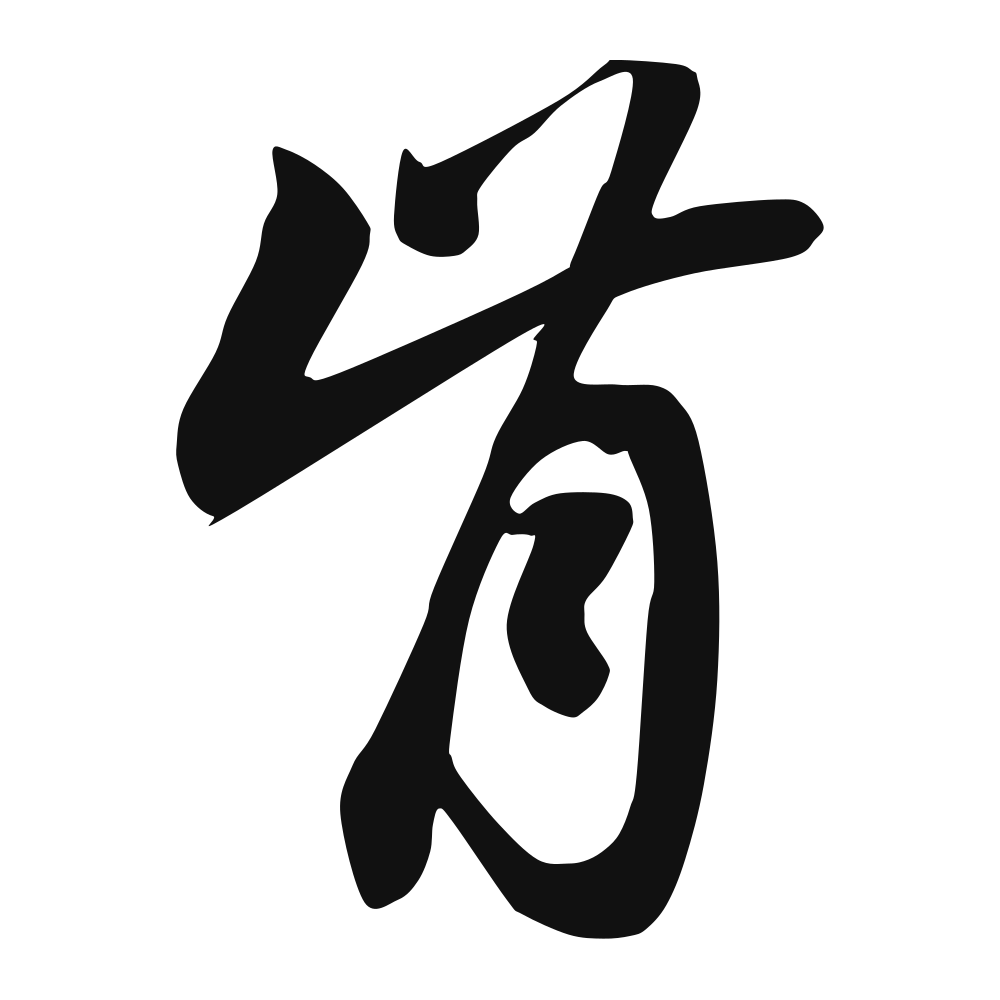
肯
to agree; to consent; to be willing to
Closest English meanings
willing·agree·consent
The Calligrapher — Zhèng Dàozhāo 郑道昭
Northern Wei master whose cliff steles are a regular-script treasure.
北魏 calligrapher (), master of regular script — known for 云峰山刻石. Northern Wei dynasty
Cultural Story
肯 originally pictured flesh adhering to bone — the tender sinew that clings, hence the part of meat worth gnawing. From the effort of gnawing at what sticks came the sense of willingness: to consent is to bite down. Early usage already asks 肯不肯 — will you or won't you — that stubborn human question.
Common words & phrases
- 肯定 affirm · sure
- 中肯 pertinent · to the point
- 不肯 unwilling
- 首肯 consent · nod approval
- 肯干 willing to work
Read the story behind the character
A toddler shakes his head, 不肯 unwilling to eat vegetables; a manager 肯定 affirms a project in Monday's meeting; a reviewer's comment is praised as 中肯 pertinent. When a difficult proposal needs approval, colleagues wait for the director to 首肯 consent with a nod. Job ads seek people who are 肯干 willing to work hard.
Why this character belongs on skin
There is a part of the bone that is also a yes. 肯 is the meat clinging to the bone, the vital flesh the old cooks sought — and from that root it became consent, the willing heart, the 中肯 that strikes true to the point. To carry 肯 is to honor the assent, the moment you stop resisting and actually say yes to the life in front of you. We withhold, we half-agree, we keep one foot out the door. This mark is for the one who commits, who lets the meat stay on the bone and mean something. There is a deep romance in the full yes — the lover, the believer, the person who arrives and stays. Let it sit on your skin like a hand pressed flat, palm open. Some of us never consent to joy; ink 肯 and you undo that holding back. The mark is a vow to the willing heart, the flesh that clings, the quiet yes worn for life where only you and the bone can read it.
Own this character
Purchase delivers the original SVG of this glyph, brushed by Zhèng Dàozhāo 郑道昭, ready to place on skin, paper, or screen.