
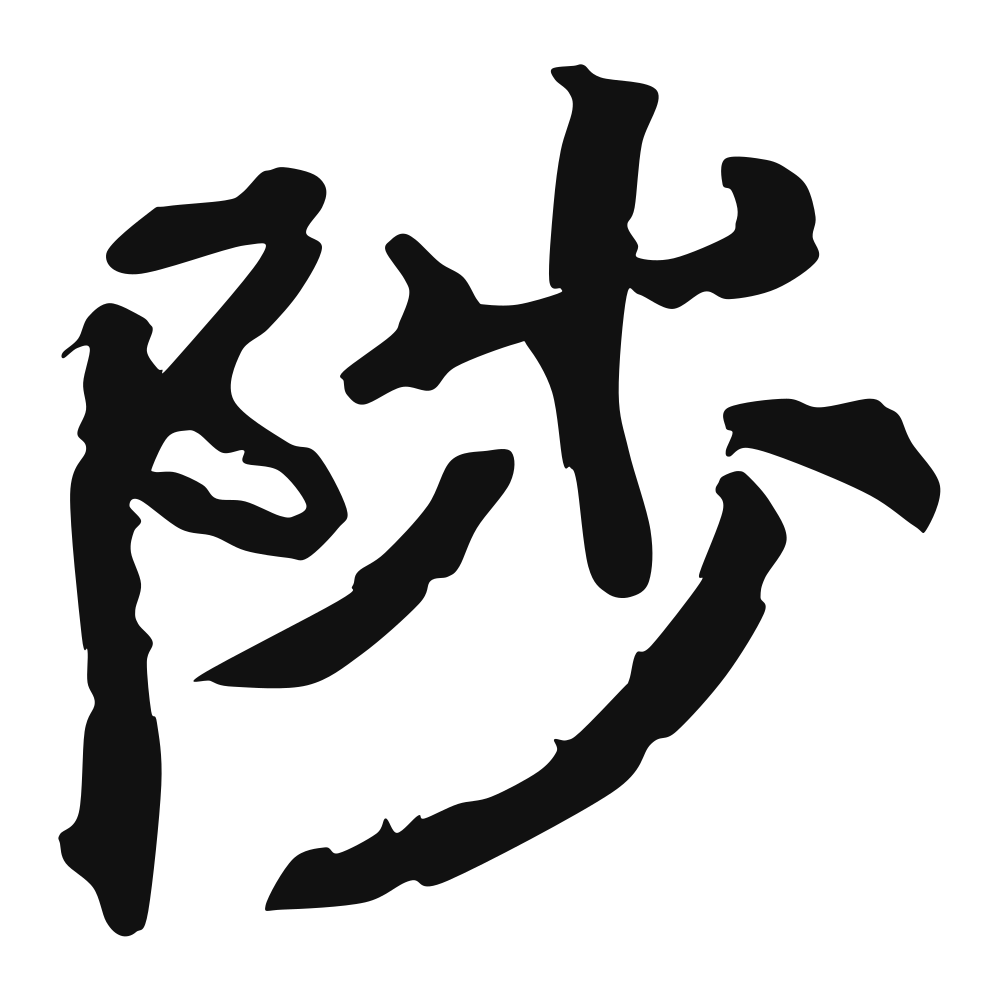
陟
to advance; to ascend; to promote
Closest English meanings
to ascend·to climb
The Calligrapher — Zhèng Dàozhāo 郑道昭
Northern Wei master whose cliff steles are a regular-script treasure.
北魏 calligrapher (), master of regular script — known for 云峰山刻石. Northern Wei dynasty
Cultural Story
陟 shows the hill radical doubled with 步, to step. The Shuowen gives it as to ascend. In the Shijing one climbs 陟彼高冈, a high ridge. Ancient inscriptions also used it for promotion, since rising in rank mirrored climbing a slope upward.
Common words & phrases
- 陟山 to climb a mountain
- 陟降 ascend and descend
- 陟罚 promote and punish
Read the story behind the character
Hikers 陟山 (climb a mountain) on weekend trips, while 陟降 describes ascending and descending a trail. Historically 陟罚 meant to promote and punish officials. Today the character survives mostly in classical quotes and plaques at mountain gates.
Why this character belongs on skin
Begin on the mountain path at first light: breath, stone, and the steady placement of one foot above the other. 陟 is the classical verb for ascending— a hill radical beside a root of stepping forward, the climb itself made a word. In the Book of Documents it meant rising in rank; in the Book of Songs it meant climbing a ridge to gaze toward home, 陟彼高冈, the beloved seen from altitude. The ancients paired it with its dark twin, 陟罚臧否— promotions and punishments, the ledger of merit— so the character carries both ambition and justice: you rise because the way is true. There is pilgrimage in it, too, the long ascent every faith prescribes. To wear 陟 is to declare the climb a creed— not the summit, the climbing. Ink along the calf or the forearm's rising line. One step, then the next, forever.
Own this character
Purchase delivers the original SVG of this glyph, brushed by Zhèng Dàozhāo 郑道昭, ready to place on skin, paper, or screen.