
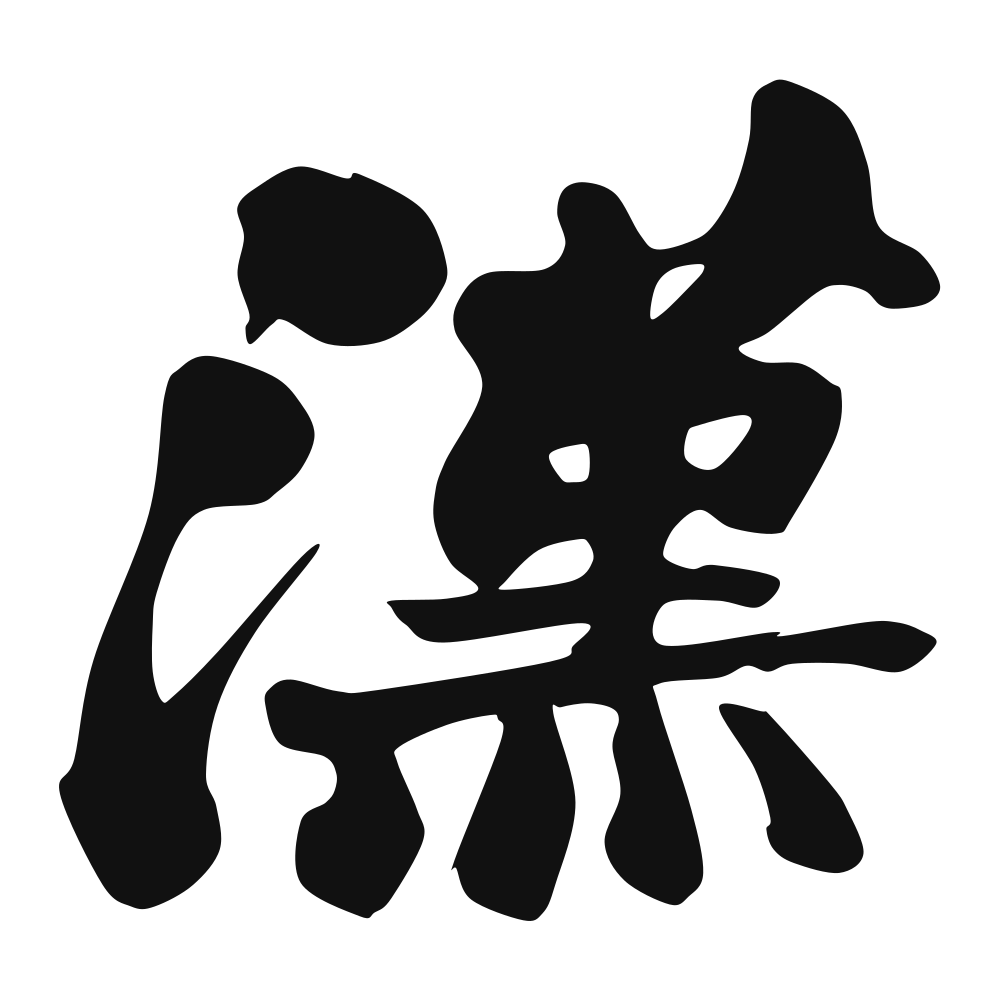
汉
Han ethnic group; Chinese (language); the Han dynasty (206 BC-220 AD); man
Closest English meanings
Han·man·Chinese·Han dynasty
The Calligrapher — Zhèng Xiè 郑燮
Qing 'Eight Eccentrics' master of the whimsical 'six-and-a-half' script.
Qing calligrapher (), master of clerical script/running script — Zheng Banqiao, the 'six-and-a-half-script' eccentric of the Yangzhou school. Qing dynasty
Cultural Story
汉 takes its name from the 漢水 (Han River), a tributary of the Yangtze. The 說文解字 says '漾也', the river. The 漢 dynasty made it the name of a people and an empire; ever after 漢 meant 'Chinese' — the 漢族, the 漢語, the civilization stretching from that river outward across the land.
Common words & phrases
- 汉语 Chinese language · Mandarin
- 汉字 Chinese character · Han character
- 汉族 Han ethnicity · Han people
- 好汉 brave man · hero · true man
- 汉子 man · fellow · husband
- 武汉 Wuhan
Read the story behind the character
汉 defines Chinese identity: we speak 漢語 (Chinese language), write 漢字 (Chinese characters), belong to the 漢族 (Han people). A 好漢 (brave man, hero) is praised; a 漢子 (man, fellow) fixes the sink; 武漢 (Wuhan) is a great river city. The character carries two thousand years of a civilization's name.
Why this character belongs on skin
Before it meant an empire, 汉 was a river, then the river of stars we call the Milky Way, and then the men who drank from that lineage. To be 汉 is to be a man of the people, broad-shouldered, unpretentious, the kind who does not announce his strength. We have our own word for this — a gentleman of the earth, a man whose worth is measured not in titles but in what he endures. There is a romance in carrying 汉, a refusal to be soft when the world asks for performance. It is the mark of someone who knows the difference between being seen and being known. On the skin it reads like a surname worn without shame, a claim to a long human line. You do not explain 汉. You live it, quietly, and the ink keeps the ledger of who you are.
Own this character
Purchase delivers the original SVG of this glyph, brushed by Zhèng Xiè 郑燮, ready to place on skin, paper, or screen.