
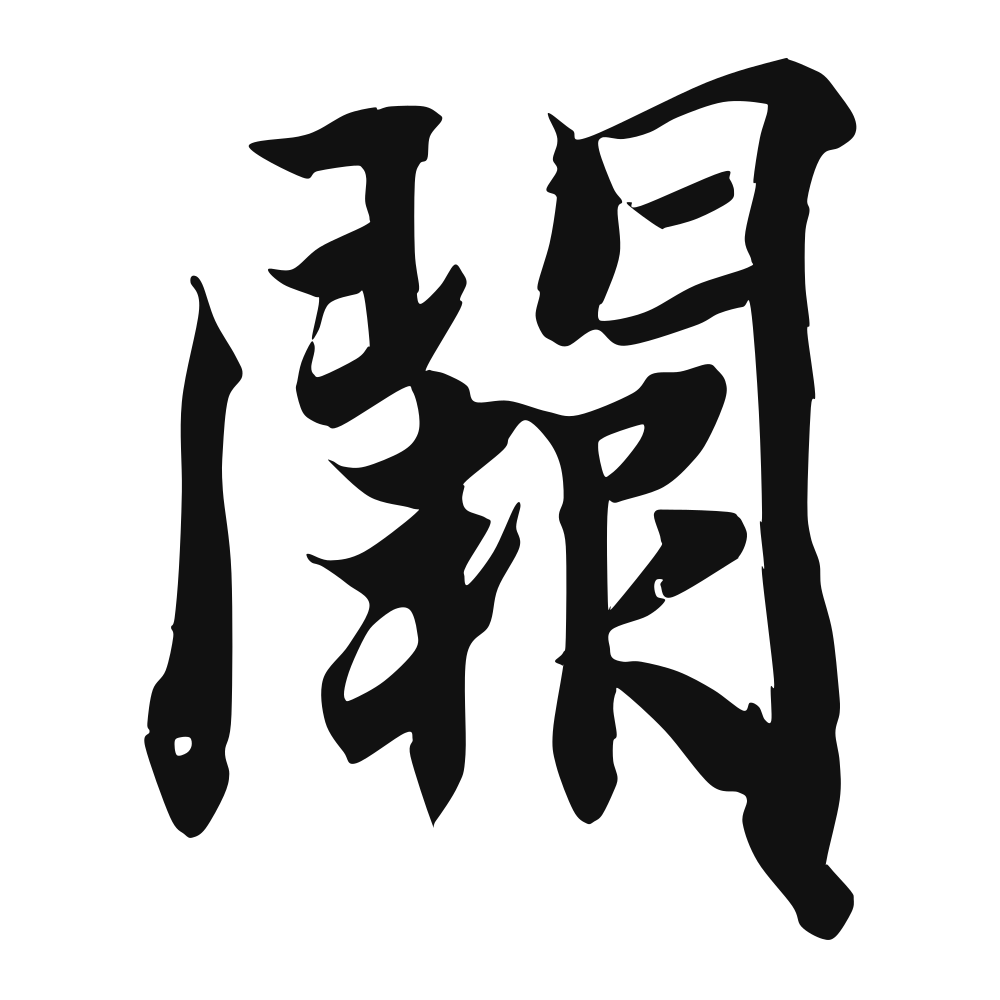
阙
阙 (què / quē) — palace gate-tower; a gap, omission. Gate 门 + 欮: the tall gate-tower of a palace. Classical life: 宫阙 — palace towers; 阙 also means 'missing' (e.g. 阙疑 leave doubt). Grammar: free morpheme — also: surname Que; mistake; Imperial city watchtower (old); fault; deficiency
Closest English meanings
palace gate·gap·imperial
The Calligrapher — Zhì Yǒng 智永
Sui monk who spread Wang Xizhi's art via his 'Thousand Characters'.
Sui calligrapher (生卒年不详(陈/隋)), master of regular script/cursive script — monk and seventh-generation descendant of Wang Xizhi who wrote a thousand copies of the Thousand Character Classic to pass the family hand down. Sui dynasty
Etymology & Meaning · 字义溯源
2 · The Character: 阙 阙 (què; also read quē) is the pair of towers that stand either side of a gateway, with nothing between them. The Shuowen Jiezi, Men section: 闕,門觀也。从門欮聲 — 'the gate-observatory', 觀 being the raised platform one climbs to look out from. The Shijing (Zheng Feng, Zi Jin) paces there: 挑兮達兮,在城闕兮 — 'to and fro, to and fro, on the towers of the wall', a lover waiting. Because the towers are defined by the gap they frame, the same graph carries the second reading quē, 'to be missing, to leave blank'. The Lunyu (Weizheng) makes it a discipline: 多聞闕疑,慎言其餘 — 'hear much, leave the doubtful blank, speak the rest with care'. Su Shi looked up at 天上宮闕, the palace-towers of heaven; Yue Fei marched 朝天闕, toward the emperor's gate. Honest disclosure: 阙 also means defect and dereliction (阙失, 阙如), and most surviving Han stone que are 墓闕 — tomb gate-towers.
Cultural Story
闕 sets 欮 within 門 and names the pair of tower-gates before a palace, built with a gap so that the ruler's approach was framed and honored. It meant palace gate, then any缺口 or missing part, since the towers stood apart. 宫阙 are imperial palaces, 城阙 city gates, and 阙如 means something wanting or absent, the gap left where a thing should be.
Where a Western reader can stand: Where a Western reader can stand: 阙 is the threshold — paired watchtowers flanking a gate (門觀也), and just as much the deliberate gap between them; its second reading gives 闕疑, the Analects' instruction to hear much, leave the doubtful blank, and speak the rest with care. Zhiyong suits it doubly: petitioners wore his monastery's wooden doorsill through until it had to be sheathed in iron (鐵門限), and his life's work was opening a threshold, breaking the family rule to teach the Wang method outside the clan. Honest caveats: the quē reading is common and negative (阙如 'wanting', 阙失 'fault', 阙漏 'omission'), the surviving Han que are overwhelmingly 墓闕, tomb gate-towers, and 阙 is also a surname.
Energy Reading
Metal (金)
Comparative symbology, not fortune-telling.
Common words & phrases
- 宫阙 palace · imperial palace
- 城阙 city gate
- 阙如 to be wanting · absent
Read the story behind the character
In historical writing 宫阙 evokes the vanished splendor of emperors' cities, and 城阙 the gates of an old town. The legal and literary phrase 阙如 marks what is absent or unspecified, as when a contract leaves a clause blank. Though no one builds 阙 today, the character endures as a dignified word for grand gates and, by a neat turn, for the gaps that remain when grandeur is gone.
Why this character belongs on skin
Every old Chinese city announced itself with towers — stone gate-flanks called que, raised on either side of the entrance so that the gate between them was a deliberate opening, an absence framed by presence. The character means both the tower and the gap it guards. That double meaning is the whole secret. What we lack is never separate from what we stand on; the missing part is architecture. The Taoists understood this: the usefulness of a room is the emptiness at its center, the music lives in the space between the notes. You carry your own gaps — the love that ended, the words unsaid, the years you cannot get back — and you have treated them as wounds. Consider instead that they are gateways. The two towers rise on either side of everything you lost, and through that opening the whole world walks in. A tattoo of que is not a mark of incompleteness. It is the frame around the door you finally stopped trying to close.
Own this character
Purchase delivers the original SVG of this glyph, brushed by Zhì Yǒng 智永, ready to place on skin, paper, or screen.