
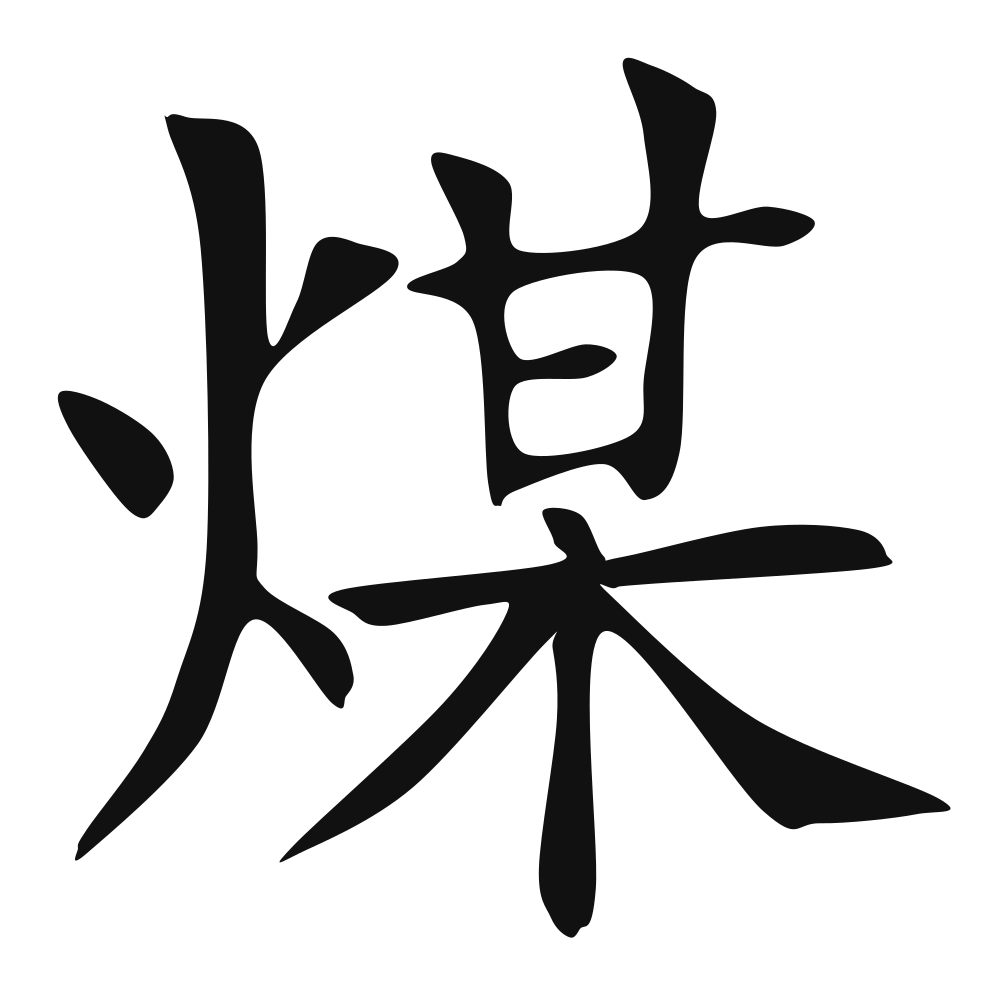
The Calligrapher — Zhōng Shàojīng 钟绍京
Tang calligrapher famed for the regular-script Lingfei Jing.
Tang calligrapher (), master of regular script — known for 《灵飞经》. Tang dynasty
Cultural Story
煤, coal, fueled the iron and salt industries of imperial China, though the classics called it 石涅 or 石墨. Ming mines fed the capital's hearths, and 煤 smoke blackened northern winters. The 天工开物 recorded its digging and use. A humble, dirty power, coal lit the scholar's brazier and the forge alike — the dark stone that kept the old world warm.
Common words & phrases
- 煤炭 coal
- 煤矿 coal mine
- 煤气 coal gas · gas
- 煤油 kerosene · coal oil
Read the story behind the character
You rely on 煤炭 for the grid, fear a 煤矿 accident on the news, and cook with 煤气 at home. 煤油 once lit lamps and now fuels jets. From a winter heating bill to a climate debate, 煤 is the black backbone of industry and comfort — loved for warmth, blamed for smog, impossible to ignore today.
Why this character belongs on skin
煤 is coal — the character that names the fire sleeping inside stone. Underneath the word is the old character for rot and for Mei, the plum: the mine-gas of northern shafts was called 梅火, plum-fire, before miners learned to fear and feed it. And the botany is true: every seam of 煤 is a forest that fell in some Carboniferous age, jungles of scale trees pressed for three hundred million years in the dark until their sunlight became, impossibly, fuel. Hold a lump and you are holding ancient summer, hoarded. The Chinese were mining it a thousand years before the West; the records describe iron towns glowing with it all winter. There is a hard consolation in the substance: pressure and burial, patiently endured, become power — not despite the darkness, but because of it. To wear 煤 is to claim that alchemy for your own buried years: what crushed you is the very thing that burns.
Own this character
Purchase delivers the original SVG of this glyph, brushed by Zhōng Shàojīng 钟绍京, ready to place on skin, paper, or screen.