
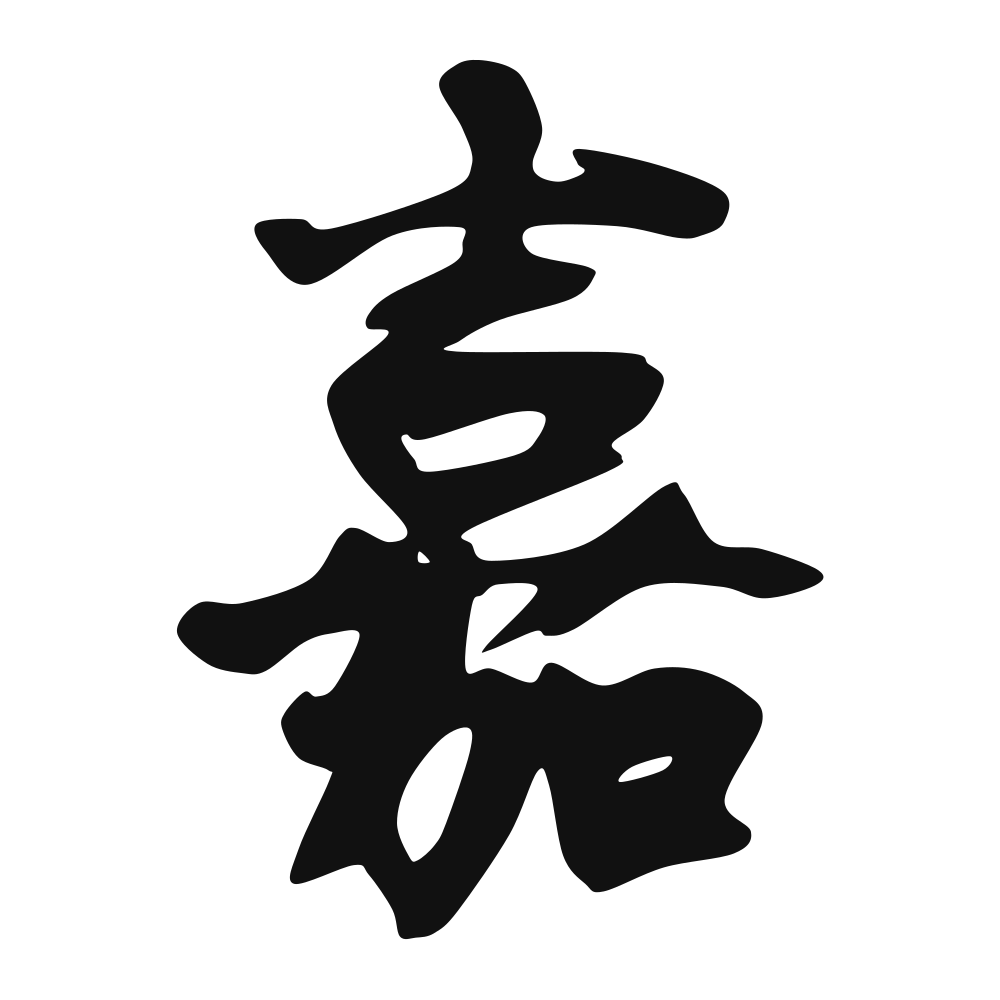
嘉
surname Jia; excellent; auspicious; to praise; to commend
Closest English meanings
excellent·fine·praise·commend
The Calligrapher — Zhōng Yáo 钟繇
Wei official credited as the father of regular script.
三国魏 calligrapher (151–230), master of regular script — the Han-Wei transition master who raised regular script from a clerical hand into a courtly art. Wei kingdom (Three Kingdoms)
Etymology & Meaning · 字义溯源
2 · The Character: 嘉 Jiā (1st tone). 《说文·壴部》: 「嘉,美也。从壴加声。」 — 'excellent; from 壴 (the drum) with 加 as phonetic.' Like 喜, it is built on a drum: excellence in Chinese is not private quality but quality that gets celebrated out loud. 《诗经·小雅·鹿鸣》 stages the scene exactly: 「我有嘉宾,鼓瑟吹笙」 — I have honoured guests; zithers are struck and pipes blown. 《易·乾·文言》 raises it to a cosmic principle: 「亨者,嘉之会也」 — success is the gathering of all that is excellent. In the ritual system 嘉礼 is one of the five rites, covering capping and marriage — the ceremonies of good fortune. Modern usage keeps the formality: 嘉奖 (to commend), 嘉宾 (an honoured guest), 嘉言懿行. Honest disclosure: 嘉 is chiefly a literary and given-name character, very common in women's names, so a Chinese reader may see a personal name or an award citation rather than a general virtue.
Cultural Story
The Shuowen reads 嘉 as 美也, excellent and fair, a character joining 壴, the drum of celebration, with 加, 'to add.' The Shi Jing sings '我有嘉賓' — I have excellent guests — as the host fills the cups, and the Classics use 嘉 for what is praiseworthy in both things and people. Emperors took 嘉 as an auspicious name, as with the 嘉慶 reign, and the word blessed harvests, virtue, and visitors alike. To call something 嘉 was to commend it before gods and guests.
Where a Western reader can stand: Celebrated excellence in the foundational script: 嘉 in Zhong Yao's archaic regular. Western readers should know it is very common in names; the hand is attributed.
Common words & phrases
- 嘉奖 commend · cite · award
- 嘉宾 honored guest · distinguished visitor
- 嘉年华 carnival · festival · fair
- 嘉许 praise · approve · commend
- 嘉勉 commend · encourage · praise
- 嘉庆 Jiaqing reign · auspicious
Read the story behind the character
A company 嘉獎 (commends, cites, awards) its top salesperson at the annual dinner; a hotel welcomes 嘉賓 (honored guests, distinguished visitors) at the gala. The city throws a 嘉年華 (carnival, festival) by the river, and a teacher 嘉許 (praises, approves) a student's effort. A manager 嘉勉 (commends, encourages) the tired team, while history buffs recall the 嘉慶 (Jiaqing reign, auspicious) era. 嘉 still marks the good, the praised, and the celebrated in modern Chinese life.
Why this character belongs on skin
嘉 is praise with a drumbeat in it: excellent, auspicious, 嘉奖 a commendation, 嘉宾 the honored guest for whom the good wine is opened. The character carries 加, to add—goodness added upon goodness, the drum adding joy to the feast. Confucian rites are built on such words: to honor virtue publicly, to name what is worthy so it multiplies. There is an old tenderness here too—嘉禾, the miraculous double-eared grain that augured a good reign, heaven's small yes. To wear 嘉 is to become a source of blessing, the one who speaks well of others and means it, the drum at the gate. Praise, done rightly, is a sacrament. Bronze inscriptions from three thousand years ago still carry it—the vessels cast to honor ancestors with excellent grain and excellent words, praise hammered into metal so it would outlast the mouths that spoke it. This character is its permanent ordination.
Own this character
Purchase delivers the original SVG of this glyph, brushed by Zhōng Yáo 钟繇, ready to place on skin, paper, or screen.