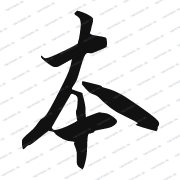
本 (běn) — Origin / True Self
Single-character Chinese tattoo · verified meaning · fine-line & minimalist friendly
Browse all 本 glyphs ↗Meaning & Nuance
本 (běn) means “root,” “origin,” or “true self” — literally the base from which something grows. In daily Chinese it underpins words for “fundamental” and “original,” and in self-development contexts it points to 本来面目 (one's original face), the unadorned true self before social shaping. It carries a calm, grounding energy rather than ambition. It is distinct from 末 (mò, tip/branch) — the two are visual opposites — and from 木 (mù, tree).
Pronunciation & Form
Pinyin: běn — a third tone (dipping, fall-then-rise). The character is 木 (mù, “tree”) with one extra horizontal stroke at the bottom marking the root, a visual pun that makes the meaning “origin/base” easy to feel.
Common Words & Phrases
Why Get 本 as a Tattoo
本 is a meaningful single-character tattoo for anyone who values authenticity, roots, or staying true to who they are. It literally pictures a tree with its root marked, so the symbol itself teaches the idea of origins and grounding. Compact and symmetric, it inks cleanly and reads as “root/true self” to Chinese readers. People choose 本 to mark where they come from, or as a reminder to return to their original, unpretentious self.
Tattoo Style & Placement
Works in fine-line, minimalist, brush, or seal-script styles — the balanced square shape suits small or medium sizes. Placements: inner forearm, collarbone, upper back, rib, or ankle. It pairs naturally with 心 (xīn, heart) or 真 (zhēn, truth). Size warning: keep strokes clear at ~5 mm+ so the root stroke isn't lost.
Authenticity & Cultural Note
Always confirm the character with a native speaker or linguist before inking. 本 can be confused with 木 (mù, tree) and 末 (mò, tip) by non-readers; the single distinguishing stroke matters. handmade.ink meanings are checked by native Chinese linguists so your 本 reads exactly as “origin / true self.”
Frequently Asked Questions
What does 本 mean in Chinese?
How is 本 pronounced?
What is the difference between 本, 木, and 末?
Is 本 a good tattoo for 'true self'?
What words use 本?
Does 本 appear in philosophy?