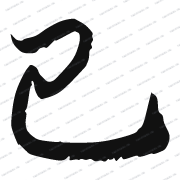
己 (jǐ) — Self
Single-character Chinese tattoo · verified meaning · fine-line & minimalist friendly
Browse all 己 glyphs ↗Meaning & Nuance
己 (jǐ) means “self” or “oneself” — the personal “I” as distinct from others. In Chinese philosophy it anchors personal responsibility: cultivating 己 is the starting point of Confucian self-discipline. It is not egotism but the grounded self you are asked to know and improve. People sometimes confuse 己 with 已 (yǐ, already) or 巳 (sì, a zodiac sign) because the three characters look nearly identical — a real risk for a tattoo.
Pronunciation & Form
Pinyin: jǐ — a third tone (a dipping, fall-then-rise syllable), the lowest and most bent of the four Mandarin tones. 己 is also the name of a traditional “earthly branch” radical, and visually it sits between the similar-looking 已 and 巳, so confirm the exact stroke shape with a native reader before inking.
Common Words & Phrases
Why Get 己 as a Tattoo
己 is a quiet, philosophical choice: it points to the self as the unit of change — you work on 己 to change your world. As a single character it is compact and balanced, ideal for someone who values self-knowledge, independence, or personal growth over outward display. It reads as “self” to Chinese readers without the ego-heavy feel of 我 (wǒ, “I”). Because the character is small and near-twins with 已 and 巳, it rewards careful, verified placement.
Tattoo Style & Placement
Best in fine-line, minimal, or small brush styles — 己 is a tidy character that stays legible at modest size. Good placements: inner wrist, collarbone, behind the ear, inner forearm, or the upper back. Pair it with 自 (zì, self) or 心 (xīn, heart) if you want a two-character phrase, but solo it reads cleanly. Size warning: keep it at least ~5 mm tall so the subtle difference from 已/巳 stays clear as skin ages.
Authenticity & Cultural Note
Always confirm the character with a native speaker or linguist before inking. 己 is easily mistaken for 已 (yǐ, already) and 巳 (sì) — three characters that differ by a single stroke — and a mix-up changes the meaning entirely. handmade.ink meanings are checked by native Chinese linguists so your 己 says exactly “self.”
Frequently Asked Questions
What does the Chinese character 己 mean?
How do you pronounce 己?
Is 己 a good tattoo meaning 'self'?
What is the difference between 己, 已, and 巳?
What words use the character 己?
How is 己 used in Chinese philosophy?