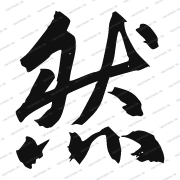
然 (rán) — Natural / Spontaneous
Single-character Chinese tattoo · verified meaning · fine-line & minimalist friendly
Browse all 然 glyphs ↗Meaning & Nuance
然 (rán) means “natural,” “spontaneous,” or “thus / so” — the way things are of themselves. It is the 然 in 自然 (zìrán, nature / natural) and 坦然 (calm and unforced), expressing ease and acceptance rather than effort. As a tattoo it evokes going with the grain of life. It differs from 自 (zì, self) though the two often appear together as 自然.
Pronunciation & Form
Pinyin: rán — a second tone (rising, like an upward lift). The character's bottom four dots are 灬, a form of 火 (fire), and the upper part originally pictured cooking meat — over time 然 came to mean “so / natural.” It is now largely a grammatical and philosophical character.
Common Words & Phrases
Why Get 然 as a Tattoo
然 is a serene, philosophical single-character tattoo for “natural / spontaneous” — chosen by people who value ease, acceptance, and living without forced effort. It pairs instantly with 自 to form 自然, one of the most beloved words in Chinese, but stands alone gracefully too. The character is balanced and inks cleanly, reading as “natural/thus” to Chinese readers. It suits a quiet reminder to let things be.
Tattoo Style & Placement
Lovely in fine-line, minimalist, or soft brush styles — 然 has a horizontal, settled shape that works small or medium. Placements: inner forearm, collarbone, upper back, rib, or wrist. Often paired with 自 (zì) as 自然. Size warning: keep the lower fire-dots legible at ~5 mm+.
Authenticity & Cultural Note
Always confirm the character with a native speaker or linguist before inking. 然 is common but its standalone sense (“thus/natural”) is subtle; pairing it with 自 to read 自然 removes ambiguity. handmade.ink meanings are checked by native Chinese linguists so your 然 says exactly “natural / spontaneous.”
Frequently Asked Questions
What does 然 mean in Chinese?
How do you pronounce 然?
Is 然 good as a tattoo for 'natural'?
What is the difference between 然 and 自?
What words use 然?
What does the bottom of 然 represent?