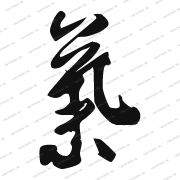
气 (qì) — Energy / Qi
Single-character Chinese tattoo · verified meaning · fine-line & minimalist friendly
Browse all 气 glyphs ↗Meaning & Nuance
气 (qì) is a foundational concept in Chinese culture — the vital energy, breath, or life force that flows through all things. In medicine, martial arts, and philosophy it means the animating power of the body and the universe. In everyday speech it simply means “air,” “gas,” or “smell.” Westerners often romanticize 气 as “qi/chi” mystic energy, but it is also utterly mundane (天气 = weather). It differs from 力 (lì, physical strength) in being about internal flow rather than brute force.
Pronunciation & Form
Pinyin: qì — a fourth tone (sharp falling) syllable, dropping abruptly like a command. The character is its own radical and shows a stylized vapor rising upward.
Common Words & Phrases
Why Get 气 as a Tattoo
气 represents life energy and breath — a powerful, compact tattoo for anyone drawn to wellness, martial arts, or Eastern philosophy. As a single character it is elegant and unmistakably Chinese, aging well on skin. People choose 气 to embody vitality, calm, or the idea that inner energy shapes outer life. Its simplicity makes it ideal for minimalist ink.
Tattoo Style & Placement
Best fits: minimalist, fine-line, or brush calligraphy. 气 is a light, open character that works as a small standalone mark. Placements: inner wrist, forearm, side rib, or collarbone. It pairs well with 水 (water), 风 (wind), or 心 (heart). Keep the strokes clear and at least a few millimeters tall.
Authenticity & Cultural Note
Always confirm the character with a native speaker or linguist before inking. 气 (qì) has traditional/alternative forms (氣 with the 米 “rice” element) and is easily confused in casual reference; verify the exact glyph so your tattoo reads as “energy/qi” and not something else. handmade.ink meanings are checked by native Chinese linguists.
Frequently Asked Questions
What does the Chinese character 气 mean?
How do you pronounce 气?
Is 气 a good tattoo for energy or wellness?
What words use the character 气?
What is the difference between 气 and 力?
What is the traditional form of 气?