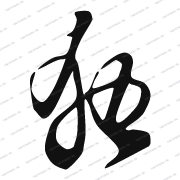
狂 (kuáng) — Wild / Unbounded
Single-character Chinese tattoo · verified meaning · fine-line & minimalist friendly
Browse all 狂 glyphs ↗Meaning & Nuance
狂 (kuáng) means “wild,” “mad,” or “unbounded” — energy without limit. 狂欢 (kuánghuān) is “carnival/revelry,” 狂热 (kuángrè) is “fanatical,” and 狂野 (kuángyě) is “wild.” As a tattoo it channels fierce passion and refusal to be contained. It is more intense and fiery than 野 (yě, wild nature) and can tip into “crazy” depending on context.
Pronunciation & Form
Pinyin: kuáng — a second tone (rising). The character uses the 犭 (beast) radical on the left with 王 (wáng) as the phonetic, picturing a mad or frenzied beast — the source of “wild/unbounded.”
Common Words & Phrases
Why Get 狂 as a Tattoo
狂 is a fierce single-character tattoo for “wild / unbounded” — for those who wear their passion loudly and refuse containment. It reads as “wild/mad” to Chinese readers and inks with raw energy. The character suits rebels, artists, and free spirits who want ink that roars rather than whispers. Pair it with 野 as 狂野 for extra force, or keep it solo for impact.
Tattoo Style & Placement
Punchy in bold brush, blackwork, or fine-line styles — 狂 carries weight at small and medium sizes. Placements: forearm, upper arm, chest, rib, or shoulder. Pairs with 野 as 狂野. Size warning: keep the 犭 beast radical distinct at ~5 mm+.
Authenticity & Cultural Note
Always confirm the character with a native speaker or linguist before inking. 狂 also means “crazy/mad” (疯狂), so the surrounding context should make your intended “wild/unbounded” sense clear. handmade.ink meanings are checked by native Chinese linguists so your 狂 reads exactly as intended.
Frequently Asked Questions
What does 狂 mean in Chinese?
How do you pronounce 狂?
Is 狂 a good tattoo for 'wild'?
What is the difference between 狂 and 野?
What words use 狂?
Can 狂 mean 'crazy' negatively?