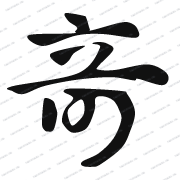
奇 (qí) — Extraordinary
Single-character Chinese tattoo · verified meaning · fine-line & minimalist friendly
Browse all 奇 glyphs ↗Meaning & Nuance
奇 (qí) means “extraordinary,” “wonderful,” or “strange in a marvelous way” — the unusual that delights rather than disturbs. 奇妙 (qímiào) is “wonderful,” 奇迹 (qíjì) is “miracle,” and 好奇 (hàoqí) is “curious.” As a tattoo it celebrates the rare and the wondrous in life. It is more admiring than 异 (yì, different) and more eventful than 特 (tè, unique).
Pronunciation & Form
Pinyin: qí — a second tone (rising). The character combines 大 (dà, “big”) on top with 可 (kě, “can/approve”) below, a structure often read as “big and acceptable” → remarkable.
Common Words & Phrases
Why Get 奇 as a Tattoo
奇 is an uplifting single-character tattoo for “extraordinary” — for people who chase wonder, miracles, and the uncommon. It reads as “extraordinary/marvelous” to Chinese readers and inks cleanly in a balanced form. The character suits someone who sees life as 奇妙 (wonderful) and wants a daily nudge toward curiosity. It's brighter in tone than the plainer “different” characters.
Tattoo Style & Placement
Works in fine-line, minimalist, or playful brush styles — 奇 is compact and reads well small. Placements: inner wrist, forearm, collarbone, behind the ear, or rib. Pairs with 妙 as 奇妙 or 迹 as 奇迹. Size warning: keep the top 大 clear at ~5 mm+.
Authenticity & Cultural Note
Always confirm the character with a native speaker or linguist before inking. 奇 also reads jī in some words (e.g., 奇偶, odd/even), but qí is the “extraordinary” reading you want. handmade.ink meanings are checked by native Chinese linguists so your 奇 reads exactly as “extraordinary.”
Frequently Asked Questions
What does 奇 mean in Chinese?
How do you pronounce 奇?
Is 奇 a good tattoo for 'wonder'?
What is the difference between 奇 and 异?
What words use 奇?
Can 奇 mean 'strange' negatively?